
BILIBILI COMICS - Manga Reader
ASUSEDEVSEComics
0.00.00 Reviews
- Version
- 1.0.4
- Installs
- 10.00K
- Age Rating
- Everyone
Screenshots
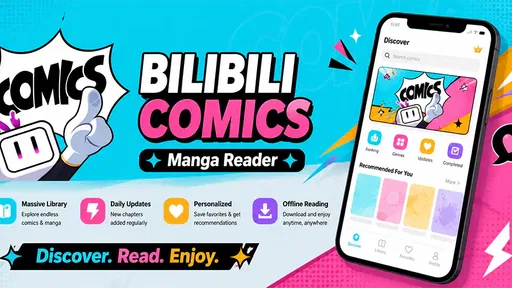


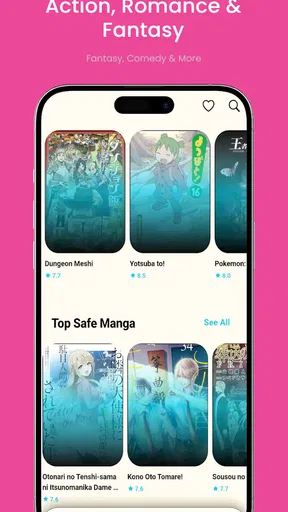
Our Review of BILIBILI COMICS - Manga Reader
 Analysis by Appyee
I approached BILIBILI COMICS as a practical manga-reading app rather than just another place to open a comic. Its main appeal is straightforward: it is designed to help readers discover, arrange, and revisit manga without turning the experience into a complicated library project. After spending time with it, I found the strongest value in the way it encourages a more organized reading routine, especially if your current method is a mixture of browser tabs, screenshots, and half-remembered titles.
This is a free Comics app from ASUSEDEVSE, aimed at Everyone and available for Android devices running version 7.0 or later. It has reached over ten thousand installs, and the current release is version 1.0.4. Those details place it in an early, still-developing stage rather than in the same maturity bracket as the largest established manga platforms. That is not automatically a weakness, but it changes how I would recommend it: I see it as a useful option to try, while experienced readers should keep their expectations realistic.
How the current reading experience feels
I’d use a shared phone or tablet with a little care: one person can browse manga while another uses it later, but the reading list should be treated as personal rather than as a household queue. In this section, I’m looking at how that distinction affects the everyday experience and why agreeing on whose reading activity is whose can prevent confusion.
A cleaner way to keep track of manga
The first thing I noticed is that the app makes sense for readers who want their manga interests gathered in one place. The basic idea is not only to open a chapter and leave; it is to create a repeatable path from finding something interesting to remembering it later. That matters because manga discovery often happens in small moments. I might see a title while commuting, save it mentally, forget the name, and then spend time trying to locate it again. An app centered on discovery and organization can remove that unnecessary friction.
I also like the distinction between browsing casually and reading with intent. On a casual day, I can explore titles without deciding immediately whether they deserve a permanent place in my reading routine. On a more focused day, I can return to the manga I already recognize and continue from there. This makes the app more useful than a simple image viewer, because the value comes from managing attention as much as from displaying pages.
For a reader with a growing list, organization is not a cosmetic feature. It changes what I actually finish. When everything is scattered across search history and bookmarks, I tend to reread the same familiar series or abandon promising ones. A dedicated manga space gives each title a clearer place in my habits. I would especially recommend that new users decide early whether they want to use the app mainly for discovery, regular reading, or both. That small decision helps prevent the library from becoming another unstructured pile.
What I would use it for in everyday life
A realistic example is a short evening reading session. I may have only a few minutes before bed, so I do not want to search broadly, compare several sites, and reconstruct where I stopped. I want to open the app, recognize a title, and continue without mental housekeeping. BILIBILI COMICS fits that kind of routine better than a general web browser because its purpose is already narrowed to manga.
It also suits readers who alternate between genres or moods. Instead of treating every saved title as something I must start immediately, I can think of the collection as a queue of possibilities: something light for a break, something longer for the weekend, and something unfamiliar for discovery. That approach is more sustainable than downloading or bookmarking everything impulsively. My practical tip is to keep the collection selective. The app becomes easier to use when it reflects genuine reading intentions rather than every title that briefly catches your eye.
The app is also approachable for someone who is not especially technical. The Everyone content rating makes it feel suitable as a general-audience manga tool, although parents should still use their own judgement about the individual comics a reader chooses. A broad age classification for the application should not be confused with every story having the same themes or tone. I would treat it as an access rating, not as a guarantee that every title will match every family’s preferences.
Where it differs from usual alternatives
The usual alternative is a mobile browser. A browser is more flexible and may be better when I need to move between many unrelated manga sources, but that flexibility also creates clutter. Tabs disappear, pages behave differently, and the reading process can feel disconnected from the act of keeping track of series. BILIBILI COMICS offers a more focused environment, which is valuable when I want a single manga-oriented place rather than a general browsing session.
Another alternative is a broad reading or library app that supports many kinds of digital content. Those tools may be stronger for managing ebooks, PDFs, or personal files, but they are not necessarily built around manga discovery. I would choose this app when the center of my reading life is manga itself. I would choose a broader library tool when I need format flexibility, document storage, or a personal collection that extends well beyond comics.
There is also a difference between a catalog-focused manga app and a simple reader for files already stored on a device. If my priority is opening personal files with precise control over folders and local storage, a dedicated file reader may be the better fit. BILIBILI COMICS makes more sense when I want the application to help me explore and organize manga as a service, not merely display files I already own.
What version 1.0.4 means for existing and new users
For a household, I’d start by deciding who is meant to use the app and whether the device itself is shared or belongs to one reader. I wouldn’t assume that a manga organizer provides separate family profiles or parental controls; instead, I’d keep the app’s role clear and make content choices together where appropriate. That simple boundary is useful before anyone begins building a reading routine.
A young product with room to establish its habits
Version 1.0.4 is the release I would judge today, and it is important not to confuse a version number with a promise of a complete long-term platform. The app is still relatively early in its public life, having been released on June 30, 2026. That gives current users a particular role: they are not only consuming a finished product, but also encountering an app whose direction may become clearer through future releases.
For a new user, this can be positive. Starting early means the workflow may feel less intimidating because there is less accumulated complexity to learn. I can build a personal habit around the current design instead of adapting to years of menus and settings. The trade-off is that a newer app may not yet satisfy readers who expect every convenience they have learned to rely on elsewhere.
For an existing user moving from another manga service, I would take a gradual approach. I would not immediately abandon my old reading method. Instead, I would bring over a small group of active titles, use the app for regular sessions, and see whether its organization actually reduces effort. This is one of the most useful tests for any reading platform: after a week of normal use, can I find what I want faster, remember what I was reading, and return without confusion?
The current release also makes it sensible to pay attention to the difference between a feature being present and a workflow being polished. A manga app may technically let me discover and organize titles, yet the experience can still depend on how quickly I can identify a series, how clearly I can separate active reading from future reading, and how smoothly I can recover after taking a break. I would judge BILIBILI COMICS on those repeated everyday actions rather than on a single impressive first impression.
Small habits that make the app more useful
My first practical recommendation is to treat discovery and commitment as separate steps. When I find an appealing title, I do not automatically make it part of my immediate reading schedule. I first ask whether I am genuinely likely to return to it. This keeps the organized side of the app meaningful and prevents the collection from becoming a record of passing curiosity.
My second tip is to use a consistent stopping point. Before leaving a chapter, I make a mental note of the scene or chapter position instead of assuming I will remember it perfectly. This is particularly helpful when I read several series at once. Even a good manga organizer cannot compensate for a reader who opens many titles without a clear routine, so a small personal system improves the experience more than endlessly rearranging the library.
A third useful workflow is to separate short-session reading from deep reading. I might use the app for a quick chapter during a break, then reserve longer sessions for a title that deserves concentration. Thinking this way helps me choose what to open instead of scrolling through the entire collection every time. It also gives the discovery tools a practical purpose: they supply options, while my routine decides which options become regular reading.
Finally, I would periodically remove titles that no longer interest me. Organization is not the same as accumulation. A smaller, current list is easier to scan and makes new discoveries more visible. This is a non-obvious advantage of using a dedicated manga app: it can support a reading habit only if I am willing to maintain the collection lightly, rather than treating every saved title as permanent.
Where the current experience may fall short
The biggest limitation is the uncertainty that naturally comes with an early-stage app. Readers who rely on a mature ecosystem may miss the confidence that comes from years of refinement. I would be cautious if my entire reading routine depends on highly specialized controls, extensive personalization, or a very particular catalog experience. The app’s central promise is clear, but that does not mean it will match every advanced expectation.
I also would not choose it simply because it is free. Free access removes a financial barrier, but the more important question is whether the workflow suits the way I read. Someone who wants to manage local comic files, move freely between multiple services, or use one application for comics and unrelated documents may find a different tool more appropriate. In my view, the free price is a reason to test it, not a reason to ignore its limitations.
Readers should also think about how much they value continuity across devices and reading situations. If I regularly switch between phones, tablets, and other platforms, I would want to verify through actual use that the app fits that pattern before making it my only reading home. I would not build my entire personal archive around any relatively young application without first confirming that its day-to-day behavior matches my needs.
Another possible source of friction is the gap between discovering a title and deciding whether it deserves time. A large selection can be exciting, but it can also produce choice fatigue. My solution is to set a simple rule: choose one current series, one backup series, and a small discovery list. That approach keeps exploration enjoyable without allowing browsing to replace reading.
Who should try it, and who should skip it
I think BILIBILI COMICS is best for someone who wants a dedicated manga environment, enjoys finding new titles, and benefits from having reading interests organized rather than scattered. It is also a sensible starting point for a casual reader who does not want to learn a complex library system. The free access and broad age rating make the initial decision easy, while the focused category keeps the experience centered on comics.
I would be more hesitant to recommend it as a sole solution to a collector with a carefully managed local archive. That person may care more about file ownership, folder control, backups, and customization than about discovery. I would also point frequent multi-platform readers toward a comparison with their existing service before switching completely. If an alternative already handles their reading history and device routine perfectly, the benefit of changing may be small.
For families, I would recommend treating the app as a reading doorway rather than assuming the Everyone label settles every content question. Parents can still guide younger readers toward suitable titles and discuss what belongs in a personal reading list. For adults who simply want an easier way to remember manga they are exploring, the app is more naturally aligned with their needs.
What I would watch in future releases
Because the current release is 1.0.4, I would watch for improvements that make organization more dependable rather than merely adding visual decoration. The most meaningful progress would be anything that helps readers distinguish between titles they are actively reading, titles they want to try, and titles they have finished or abandoned. That separation is what turns a manga app from a catalog into a useful personal tool.
I would also pay attention to how the developer, ASUSEDEVSE, handles the transition from early adoption to long-term maintenance. A healthy product should become easier to trust as updates clarify its direction and smooth out repeated points of friction. I am less interested in a long list of new buttons than in whether returning users can complete common tasks with fewer interruptions.
Compatibility matters too. The app supports Android 7.0 and later, which covers a broad range of devices, including older phones that many people still use. That is helpful for accessibility, but older hardware can make any reading app feel different from device to device. I would keep an eye on whether future versions preserve that broad reach while continuing to feel responsive on less modern phones.
My overall view is cautiously positive. BILIBILI COMICS has a clear purpose, a useful focus on manga discovery and organization, and a low-risk free entry point. I would recommend trying it with a small, realistic reading list and judging it by how well it supports the next chapter, the next week, and the next return visit. Its real strength is not simply opening manga; it is helping me turn scattered interest into a manageable reading habit.
At the same time, I would not present it as the universal answer for every manga reader. Its early position means some people will prefer the depth and predictability of a more established alternative, while others will appreciate a focused app that feels easier to approach. If your main problem is losing track of what you want to read, this is worth exploring. If your main problem is managing personal files or demanding a fully mature cross-device library, I would compare it carefully before making the switch.
Verdict
Strengths of BILIBILI COMICS - Manga Reader
- Large catalog of manga, manhua, and webcomics in multiple genres.
- Regular chapter updates keep ongoing series fresh and engaging.
- Clean reading interface with adjustable scrolling and page modes.
- Supports offline reading for selected chapters on mobile devices.
- Personalized recommendations help discover comics matching your interests.
Limitations of BILIBILI COMICS - Manga Reader
- Many popular titles require coins, subscriptions, or in-app purchases.
- Content availability varies by region because of licensing restrictions.
- Some translations may contain awkward wording or inconsistent quality.
- Frequent notifications can feel excessive unless carefully customized.
- Offline downloads can take considerable storage space on your device.
Similar Picks in This Category
View All
WEBTOON: Manga, Comics, Manhwa
NAVER WEBTOON4.6

MangaToon: Comic & Manga
MangaToon4.3

네이버 웹툰 - Naver Webtoon
NAVER WEBTOON4.3

Tapas – Comics and Novels
Tapas Entertainment Inc.4.2

Lezhin Comics - Daily Releases
LEZHIN ENTERTAINMENT3.3

WebComics - Webtoon & Manga
WEBCOMICS HOLDINGS HK LIMITED4.4
Frequently Asked Questions
What is BILIBILI COMICS - Manga Reader?
BILIBILI COMICS is a digital manga and manhua reading app that offers a broad selection of serialized comics, including romance, fantasy, action, drama, and other popular genres. The app is designed for mobile reading, with categorized recommendations, updated chapters, personalized libraries, and a reader interface that makes it easy to continue a series across multiple sessions.
Is BILIBILI COMICS free to download and use?
The app is generally free to download, and users can read selected titles or chapters without paying. However, availability depends on the series, region, and publishing rights. Some chapters may require in-app coins, a subscription, or another form of payment, while certain content may be unlocked through promotions, daily rewards, or waiting periods. Always check the title’s access conditions before subscribing or purchasing.
Does BILIBILI COMICS offer official and licensed manga or manhua?
BILIBILI COMICS publishes content through official digital distribution agreements, but the exact catalog can vary by country and title. Licensing restrictions may affect which series are available, how quickly chapters are released, and whether a particular comic can be read in your region. Users should rely on the app’s current catalog and publisher information rather than assuming every popular manga is included.
Can I read comics offline with BILIBILI COMICS?
Offline reading may be available for supported titles or chapters, but it is not necessarily offered for every comic or account type. When downloads are supported, chapters usually need to be saved while connected to the internet and may remain accessible only inside the app. Downloaded content can also be subject to expiration, device limits, or digital-rights restrictions, so it is best to verify the download option for each series.
Is BILIBILI COMICS suitable for children and teenagers?
The app contains comics aimed at different age groups, and some stories may include romance, violence, mature themes, suggestive scenes, or emotionally intense topics. Parents and guardians should review the app’s age rating, individual series descriptions, and available account or device controls before allowing younger users to read. Content standards and catalog availability may also differ depending on the user’s country.
